

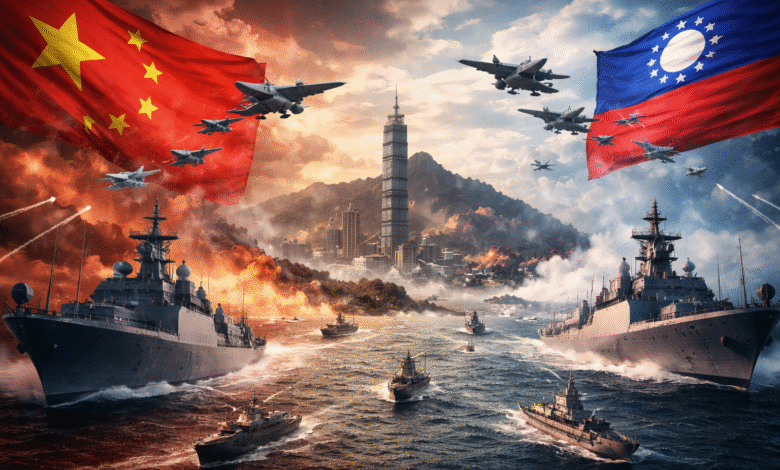
China–Taiwan Conflict 2026: A Rising Flashpoint in Global Geopolitics
The China–Taiwan conflict in 2026 has intensified into one of the most closely watched geopolitical crises in the world. While there has been no formal declaration of war, the steady rise in military activity, political signaling, and strategic pressure has created a volatile environment in the Indo-Pacific region. This ongoing standoff reflects not a traditional battlefield conflict, but a calculated struggle for power, influence, and sovereignty.
At the heart of the issue lies a long-standing dispute rooted in history. Since 1949, when the Chinese Civil War led to a political split, China has viewed Taiwan as a breakaway province that must eventually be reunified with the mainland. Taiwan, however, has evolved into a self-governed democratic entity with its own political system, economy, and identity. This fundamental disagreement continues to drive tensions between the two sides.
In recent months, the situation has escalated significantly. China has increased its military presence around Taiwan, conducting large-scale air and naval exercises. Chinese fighter jets frequently enter Taiwan’s Air Defense Identification Zone (ADIZ), while warships patrol nearby waters. These actions are not accidental—they are strategic moves designed to test Taiwan’s defenses and assert dominance without crossing the threshold into full-scale war.
Taiwan, on its part, has responded with heightened vigilance and preparedness. The government has prioritized defense modernization, investing in advanced missile systems, submarines, and asymmetric warfare capabilities. Rather than matching China’s military strength directly, Taiwan is focusing on deterrence—making any potential invasion costly and difficult to execute.
What makes the China–Taiwan tensions particularly complex is China’s reliance on what analysts call “grey-zone warfare.” Instead of launching an outright attack, Beijing is combining military intimidation with cyber operations, economic pressure, and diplomatic messaging. This approach allows China to gradually weaken Taiwan’s position while avoiding a direct military confrontation that could trigger global consequences.
The implications of this conflict extend far beyond the region. Taiwan holds a critical position in the global semiconductor industry, producing a significant share of the world’s advanced chips. Any disruption in Taiwan could send shockwaves through global supply chains, affecting industries ranging from consumer electronics to automobiles.
Moreover, the conflict has drawn in major global powers. The United States continues to support Taiwan through military aid and strategic partnerships, while countries like Japan are increasingly vocal about maintaining stability in the region. This international involvement raises the stakes, transforming the dispute into a broader contest of geopolitical influence.
Looking ahead, the future of the China–Taiwan conflict remains uncertain. While China continues to build military capability and assert pressure, it also appears cautious about initiating a full-scale invasion due to the potential economic and diplomatic fallout. For now, the situation seems to be heading toward a prolonged period of strategic tension rather than immediate war.
In conclusion, the China–Taiwan conflict in 2026 is a defining issue of modern geopolitics. It is a conflict shaped not by open battles, but by calculated moves, shifting alliances, and constant pressure. As the world watches closely, the trajectory of this standoff will play a crucial role in shaping the future of global order and stability.